
• About
  • Contact Us…

Inside-Out, Outside-In

~ Every journey worth taking…starts on the inside.

Inside-Out, Outside-In

Category Archives: The Script

Mutual Self-Interest vs. Love (and why Dr. Phil and Oprah have it wrong…)

30 Tuesday Oct 2012

Posted by hunterlh in Development, The Script

≈ 1 Comment

Tags

cupid and psyche, dr. phil, he's not that into you, hunter lee hughes, love as a kidnapping, mutual self-interest vs love, oprah, oprah winfrey, petrarch, petrarch and laura, plutarch and laura, self-esteem and love, she's not that into you, the difference between love and mutual self-interest, what is love?, William-Adolphe Bouguereau

This is the second post in a series on the themes of “Inside-Out, Outside-In.” The first in the series, “Is Cool cool? Reflections on the new Religion” is available to read here.

For years, “Cupid and Psyche” by William-Adolphe Bouguereau hung in between two lonely windows of my studio apartment in Koreatown, somewhat inappropriately overlooking a bus stop, a Korean evangelical church and gang activity which eventually claimed a coin collection inside my apartment. The print made the move with me to the Valley and then to West Hollywood but was eventually (appropriately) stolen (or liberated?) from my parking spot storage area. I hardly blame the thieves on that one.

Cupid abducts Psyche.

After all, romantic love deserves better placement than a makeshift, open air garage. Despite my carelessness with the iconic image, I do consider myself a bit of a romantic…and boy are we in need of some warriors of love to defend against the onslaught of modern-day rational prophets that no longer trumpet love…but rather a concept I call “mutual self-interest” masking as love.

The worst offenders of this aggressively self-interested philosophy are Oprah and Dr. Phil, although I’ll focus on Dr. Phil since he’s the one still in major syndication. One can only imagine what would transpire should Petrarch, resurrected from the Beyond, end up appearing on “Dr. Phil” to talk about his beloved Laura. No doubt, Dr. Phil would set Petrarch straight right away, “She’s not that into you! Get over it!” might be his candid advice and undoubtedly he would follow it up with the penetrating psychological question, “What makes you so drawn to unavailable women?” If Dr. Phil succeeded in getting Petrarch to “see the light” we might miss out on some of the most heartbreaking, clear-sighted poems chronicling the human capacity for connection, ecstasy and pathos. So, with any luck, Petrarch, no doubt a more interesting, thoughtful man of gravitas than Dr. Phil, would simply reply, “You’re wrong. I love her.”

And we might add that Petrarch’s love for Laura, despite her inability to return his love at the same level, gave his life meaning…and ours. Petrarch’s steady, inspiring dedication to Laura seems crazy because we no longer value love for love’s sake. We seek to build romantic relationships based on mutual self-interest. And if a dash of feeling and hormones are thrown into the equation, all the better. But a divorce, decay or the like is sure to follow with these unsteady arrangements as soon as the other person starts behaving in a way that contradicts their partner’s self-interest. Then, man, that other person has to start behaving differently…right away…or they have to go. After all, my self-esteem isn’t gonna take this bullshit! (Here, Petrarch would smile wistfully and say, “Go home and think it over, boy.”). In short, we only want to let out a bit of “love” when we know it’s completely “safe” within the construct of a mutually self-interested relationship.

Let’s define terms a little better. What is a relationship of mutual self-interest? It looks something like this. Man, I’m so attracted to that person! They turn me on. And they’re an up-and-comer in this career field I admire. Wow. That’d be cool to be a team with a person like that. We’d look hot together at a company party and bring in two incomes – so helpful in the big city! The sex is good. I’m getting off and so is the other person. Plus, the person gets along with my family, which is cool. That’ll make things easier when we bring up kids. And we have a pretty good personality match. The other person doesn’t annoy me too much and vice versa. And the person gets along with my friends, so I don’t have to worry about huge drama on that front. Hey! Damn! I’m checking off so many boxes of my “Requirements for a Relationship List” with this person. I’m in!

Is it really so bad to build a relationship based on mutual self-interest? I think so, but others could argue that it’s practical. Your mutual self-interest relationship can help you advance in the world. Your mutual self-interest relationship can facilitate the building of a home and nest egg. Your mutual self-interest relationship protects you from feeling “less than” or “insecure” because you’ve both agreed equally to this mutual self-interest relationship. And your mutual self-interest relationship protects you from feeling the full onslaught of loving feelings for another human being without a sense (however false) of security.

Real love has nothing to do with security. It is a kidnapping in the night. It requires ascension to the heights of Heaven with an unknown creature followed by a descent into the depths with little chance of survival. It is a story of togetherness and loss and togetherness again. At the moment you really see the true soul of your beloved, the risk of sabotage is almost cruelly high (as happens to Psyche when she realizes she’s been kidnapped by an immortal beauty rather than the monster she feared). But the fulfilling moments of love are so awe-inspiring and real that they merit Psyche’s trip to the depths of Hades, where Cupid’s subtle guidance leads her back into his embracing arms. Real love is rocky, almost certainly untenable…almost. It is for the brave. It is for the stupid. It is for the exceptional…and theirs alone to claim when won. But even when the love is lost, as happened to Petrarch, yours is the victory of a life made meaningful and clear despite suffering. You are enriched by the acrobatics of the soul, juggling to stretch and grow enough to pass the rigorous test that love throws down.

Build a mundane relationship based on mutual self-interest if you like. I’m sure Dr. Phil and Oprah would applaud. It certainly makes sense to do so. A relationship based on mutual self-interest certainly creates a bond of materialists that helps you to face the world…for a time.

But only love, that old thief of all things rational, creates your character and unleashes your soul…to your beloved and to everyone that matters. Go for love – I dare you.

—

Hunter Lee Hughes is a filmmaker and actor living and working in Los Angeles and the founder of Fatelink. His current feature film Guys Reading Poems is touring film festivals and this blog is dedicated to the process of making his second feature film, “Inside-Out, Outside-In.” If you enjoy the blog, please support our team by following us on Facebook, Twitter (@Fatelink) or Instagram (@Fatelink).

Share this:

  • Share on Facebook (Opens in new window) Facebook
  • Share on X (Opens in new window) X
  • Share on Tumblr (Opens in new window) Tumblr
  • Share on LinkedIn (Opens in new window) LinkedIn
Like Loading...

Accepting your personal Steppenwolf

27 Saturday Oct 2012

Posted by hunterlh in Development, The Script

≈ Leave a comment

Tags

bourgeoisie, existentialism, finding yourself in your characters, herman hesse, hunter lee hughes, revising a script, soulsearching, steppenwolf, writing as a hobby, your writing as your soul, zsa zsa gershick

In reading an excerpt of Herman Hesse’s “Steppenwolf” for my audio c.d. Existentialism course, I’m struck by how much of the creative process is accepting your own inner beast with all its variety. Hesse describes a man-beast, who despises the bourgeoisie life of reporting to an office and refuses comfort from the salient symbols that satisfy the more childlike and demure personalities of a culture. And yet, the man-beast is never satisfied because when he unleashes the primal raw energy of his fury and sexuality, the man side of him disapproves of his cruelty, his animalistic crudeness and his lack of faith in the goodness of others. But when the man side takes over, the wolf within mocks the man’s hypocritical, clumsy attempts at goodness which are rarely more than masked self-interest. And so the Steppenwolf wanders – outside of society, at war with himself, at risk of self-destruction.

Certainly, I relate to the struggle of the Steppenwolf. I never trust artists who report to a nine-to-five and find they are rarely more than hobbyists hoping for a promotion that will never materialize. To live the life of an artist, you have to risk something. You have to step into an unsafe wildnerness all alone. You have to reject something that makes sense to almost everyone else. And you have to live with the suffering that, indeed, you may fail. That is the greater likliehood. You must endure watching others make steady progress in the world while you scavenge for hidden beauty that others won’t see. They probably won’t see it even after you’ve found it against all odds and hold it up to their face. They will say you are holding thin air. But if you are a Steppenwolf, what choice do you have?

But Hesse isn’t so cruel as to provide a penetrating observation without a solution…or at least some hope. For him, the Steppenwolf’s salvation comes when he realizes that he is not just man and beast, but (to paraphrase) man, beast, butterfly, flower, stream, brick castle, poverty-stricken child and bourgeoisie banker all rolled into one. The mistake of the Steppenwolf is in seeing himself as divided in two. Actually, he is divided into infinite.

And so, reading Hesse, I have realized something about “Inside-Out, Outside-In.” A few days ago, playwright Zsa Zsa Gershick implored me to search for myself in all the characters. I took the advice to heart and have been mindmapping to better understand the humans that populate the story. Hesse and the Steppenwolf admonishes me to go one step further and see the script as a reflection of the fragments of my soul that come together as one complete universe in the script itself. The longing for unity that drives men to destroy themselves can only be satiated when these variegated parts come together in a satisfying arrangement, for which there is no math to determine. Simply accepting the infinite aspects of my own psyche and allowing them to orchestrate themselves will be enough. The script is not so much a war between various sides of myself, but a chance for them all to show up and dance together. It only looks like a battle because, well, for most of us, we lose touch with the reality of the Steppenwolf so quickly and so often that inevitable inconsistencies and paradox always look like war.

—

Hunter Lee Hughes is a filmmaker and actor living and working in Los Angeles and the founder of Fatelink. His current feature film Guys Reading Poems is touring film festivals and this blog is dedicated to the process of making his second feature film, “Inside-Out, Outside-In.” If you enjoy the blog, please support our team by following us on Facebook, Twitter (@Fatelink) or Instagram (@Fatelink).
Share this:

  • Share on Facebook (Opens in new window) Facebook
  • Share on X (Opens in new window) X
  • Share on Tumblr (Opens in new window) Tumblr
  • Share on LinkedIn (Opens in new window) LinkedIn
Like Loading...

Interpreting Dreams – an artist’s shortcut to the unconscious

25 Thursday Oct 2012

Posted by hunterlh in Development, The Script

≈ Leave a comment

Tags

blue horses, creative writing, developing characters through dreams, how to interpret dreams, interpreating dreams to help with your creativity, interpreting dreams, jungian approach to dreams, revising your screenplay, river of fire, robert a johnson, Screenwriting, symbolism

Few books have changed my life as much as Robert A. Johnson’s Inner Work. In it, Johnson describes a systematic approach to understand the unconscious forces bubbling in our psyches and a way to access them. For an artist, nothing is more important. As I revise the script, I’m seeking to understand the main characters more deeply and since all the characters are a reflection of my own psyche, the key to that process is understanding and communicating with elements of my unconscious that currently remain unseen to my waking self.

Johnson’s system is relatively simple, but profound when applied rightly. First, write down your dream in great detail. Then, identify all the different important symbols of that dream and circle or underline them. Then, create a sort of mindmap for each individual symbol with all the associations that come to mind with regards to that symbol. Next, using your intuition, feel out which interpretation of each individual symbol “feels right” to you, and using those interpretations, write out an analysis of the dream. At the end of the process, you should be startled, shocked or taken aback because the dream should be bringing you information about yourself that you DO NOT ALREADY KNOW. And remember, that when you see yourself in the dream, your own image represents your EGO while the other symbols and people in your dream represent aspects of your psyche that your ego doesn’t want to see.

So, here is a dream I had back in 2006 that was profound for me and important to analyze.

In the dream, I was the adolescent eldest brother in a rural village from long ago. The land was suffering because of a cruel curse. The ravines, which once held rivers that nourished our town and many others, had been replaced by rivers of fire that never burned out. There was a legend that told of a prescription for the current suffering of the people. If a blue horse were to willingly sacrifice itself and walk into the ravine of fires, they would transform once more into flourishing rivers and the townspeople could resume a normal life. However, the people had become so desperate, anxious and terrified of the rivers of fire that they begin to use blue spray paint to coat normal horses, which are then torturously dragged into the rivers of fire, neighing and screaming as they die. Having seen one too many horses die unnaturally, I realize that I am the only one who can find the real blue horse. I say goodbye to my worried family and set out to find it.

In Johnson’s system, I have already performed steps one and two. Step one came with my detailed writing of the dream. Step two came with the bolding of the key symbols and characters in the dream. Step three would involve me listing each of these symbols on a separate piece of paper and brainstorming as to what I associate with each of the bolded symbols. Then, I would “feel out” which association seems correct to this dream and pull together an interpretation. At the end, I should have valuable insight into a new direction for my life or learn something about myself that I didn’t know. If the dream only feels like a confirmation of a value I’m already holding, then I haven’t gone deep enough.

Obviously, this process takes hours for a dream that seemingly touched the psyche for but a moment. But insights from dreams are gold to every artist. Everything we write is some clumsy attempt to synthesize the psyche and create a wholeness out of it. So the deeper we go with our dreams, the deeper and more interesting our screenplay characters.

—

Hunter Lee Hughes is a filmmaker and actor living and working in Los Angeles and the founder of Fatelink. His current feature film Guys Reading Poems is touring film festivals and this blog is dedicated to the process of making his second feature film, “Inside-Out, Outside-In.” If you enjoy the blog, please support our team by following us on Facebook, Twitter (@Fatelink) or Instagram (@Fatelink).

Share this:

  • Share on Facebook (Opens in new window) Facebook
  • Share on X (Opens in new window) X
  • Share on Tumblr (Opens in new window) Tumblr
  • Share on LinkedIn (Opens in new window) LinkedIn
Like Loading...

Deepening the Characters – Mindmapping

24 Wednesday Oct 2012

Posted by hunterlh in Development, The Script

≈ 2 Comments

Tags

character biographies, creating character biographies, creating characters, developing characters, developing your characters, how do i develop my characters for a screenplay, mindmap, Mindmapping, mindmapping for screenwriters, writing characters

Recently, I was advised to write a biography for all the characters in “Inside-Out, Outside-In” after our read-through provoked some questions about their backgrounds and desires. Of course, I already feel like I know my characters pretty well, but committing ideas in a written form does solidify and clarify things. My preferred method for tackling this is mindmapping (as I mentioned earlier).

The skeletal mindmap I’ve developed includes a number of qualities of the character, including their personal history in terms of their family, career, education and romantic relationships as well as ideas about their principles, personality types and sexuality (including some hidden desires). For good measure, I also include relevant images, colors and locations associated with the character to help you as you prepare to direct a film.  You’ll want the visuals associated with that person to provide a shortcut to the psyche of whoever you’re depicting. You have to give the inner life of each character in a matter of minutes, so there is no room to be lazy about anything in the frame with them.

Here’s my mindmap sample. It’s by no means the only option, but it’s a start. Let me know if it helps you develop your characters!

Sample of a character mindmap


—

Hunter Lee Hughes is a filmmaker and actor living and working in Los Angeles and the founder of Fatelink. His current feature film Guys Reading Poems is touring film festivals and this blog is dedicated to the process of making his second feature film, “Inside-Out, Outside-In.” If you enjoy the blog, please support our team by following us on Facebook, Twitter (@Fatelink) or Instagram (@Fatelink).

Share this:

  • Share on Facebook (Opens in new window) Facebook
  • Share on X (Opens in new window) X
  • Share on Tumblr (Opens in new window) Tumblr
  • Share on LinkedIn (Opens in new window) LinkedIn
Like Loading...

From the mouths of actors….the first reading.

23 Tuesday Oct 2012

Posted by hunterlh in Development, The Script

≈ Leave a comment

Tags

alessandro piersimoni, bohemian lifestyle, developing your screenplay, hunter lee hughes, inside-out-outside-in, justin schwan, rex lee, screenplay readings, shon perun, should i do a reading of my screenplay, themes in screenwriting, thy will be done prayer, zsa zsa gershick

“Help us to see what we need to see, hear what we need to hear. Thy Will, not ours, be done,” is my best paraphrase of the prayer spoken by accomplished playwright and filmmaker Zsa Zsa Gershick to kick off the first reading of “Inside-Out, Outside-In.” (more on the title later).

I’ve written four feature length screenplays before. None of them have been produced. This time, I wasn’t taking any chances and wanted from the start to invoke a higher purpose for the material, especially since the tension between ego-driven and authentic, soul-driven choices provides the core conflict of the movie.

The reading took place at the 5th floor screening room at my communal office. Television’s Rex Lee quickly voiced the question on many minds, “Is this going to be the temperature setting for the whole night?” I looked anxiously at the locked thermostat. I knew a key card wasn’t going to cut it with that thing. What we wouldn’t be hearing was the whirring of an AC at work. Justin Schwan, reading a lead role, shed a modern-day, professorial grey button-down sweater, preferring a white tank top, but Zsa Zsa (in a tailored suit) and Ashley Osler (in a cream, fluffy turtleneck sweater) weren’t so lucky. It was hot.

But whatever discomfort the heat provided did not arrest our progress through the script. I felt torn between the focus on my own role and marveling that living human beings were embodying characters that began as notions, developed into imaginary conversationalists and, now, met with flesh and blood.

Readings help to reveal how the structure of a piece is working and, on that score, I’m beyond pleased. They also spark challenges to identify the really important aspects of a character – whether you’ve pegged the guy at the right age, the right sexuality, the right archetype. Here, some adjustments will occur. They also start to indicate the range of reactions from an audience. I learned long ago not to attempt to please all segments of the audience and sucking up to the mainstream is anathema to my quirky humor and homoerotic sensibilities. But still, it’s helpful to know which characters they wanted to know better, who makes a shift in behavior that takes them by surprise and assess the universality of the piece. I consider my niche to be creating a surprising universality through characters usually overlooked or stereotyped and feel this script is in alignment with my own authenticity. So I felt grateful that many of my friends voiced support for the script as a success or on the road there.

“I don’t like the title,” said one of the most interesting guys I know in Los Angeles. Alessandro Piersimoni gave up a lucrative career in advertising to pursue filmmaking in Los Angeles and so far has found some success as an actor, appearing in David Fincher’s “Girl with the Dragon Tattoo.” His eye for aesthetics surpasses my own, although my innate if somewhat downplayed competitive spirit challenges me to catch up.

“The title doesn’t do anything for me. Maybe shorten it to ‘Inside-Out’ or change it to something else. Other than that, you’re 99.9% done. Just take it to the literary agent and say, ‘Here.'” He mentioned two or three other problem areas and encouraged me to just get on with it. Compliments from those with developed sensibilities really mean something and I relished Alessandro’s words as something hard-earned and real.

Once the reading broke up, some of the guys, including Justin, the talented and underused Shon Perun and Alessandro enjoyed a beer. Like Christmas coming early, Justin couldn’t believe a professional office would feature frosted mugs in the freezer and beer on tap, but the quirky Tracey Verhoeven was a little late to the party and had to settle for a plastic cup.

Zsa Zsa and her erudite wife Elissa closed it down, talking to me another half hour about the script, its theme and their own experience casting and refining the scripts for Zsa Zsa’s projects. Zsa Zsa generously tried to sum up her playwriting degree in a few minutes and boiled it down to, “Know the theme. Make sure everything supports that. Write your character bios and find yourself in ALL of them.” Elissa, like a big sister, asked if I parked close or if they should wait and walk me to the car.

Soon after, Rex and Richie, an adorable 26-year old techie hipster-who-denies-he’s-a-hipster, texted me. They ordered me to drive to Bossa Nova on Sunset, where they’d ordered me a steak that was on its way. I showed up as the waiter brought my food to the table and noticed the guys had already eaten and their plates had been cleared. Ah, friends. A lovely discussion ensued.

Tracey emailed me at 12:40 a.m. with a concern about the reading. I called her back at 12:41 a.m. and we talked it out, but her note so provoked me that I called Rex at 1:20 a.m. and then Richie at 1:45 a.m. before finally heading to bed around 2:45 a.m. I slept til Richie’s phone call at 11:40 a.m. this morning (save for a catatonic walk with my pug) and felt oh-so-Bohemian for sleeping in on a Tuesday.

The next day, I’m full of enthusiasm and optimism. Seeing and hearing these fifteen beautiful souls – each so unique – pull together for the night to give voice to something new made me truly grateful for this Bohemian life I’m proud to live. As an unconventional artist, you never know if you’re gonna end up reciting poetry under a bridge with some donated whiskey, but this morning, after my City Harvest Black Vanilla tea (you read that correctly), I feel curious for a continuation and evaluation of the story of the life of my movie…and its gallery of characters – past, present and future.

For the record, here was the cast of the first reading of “Inside-Out, Outside-In” in alphabetical order:

Camille Carida, Marilyn Chase, Zsa Zsa Gershick, James Lee Hernandez, Hunter Lee Hughes, Rex Lee, Thyme Lewis, Marlyse Londe, Ashley Osler, Shon Perun, Alessandro Piersimoni, Ann Russo, Justin Schwan, Erwin Stone and Tracey Verhoeven. Guests included Ms. Elissa Barret and Mr. Richard Scharfenberg. The reading took place at WeWork Hollywood, 7083 Hollywood Boulevard, 5th Floor Screening Room.

—

Hunter Lee Hughes is a filmmaker and actor living and working in Los Angeles and the founder of Fatelink. His current feature film Guys Reading Poems is touring film festivals and this blog is dedicated to the process of making his second feature film, “Inside-Out, Outside-In.” If you enjoy the blog, please support our team by following us on Facebook, Twitter (@Fatelink) or Instagram (@Fatelink).

Share this:

  • Share on Facebook (Opens in new window) Facebook
  • Share on X (Opens in new window) X
  • Share on Tumblr (Opens in new window) Tumblr
  • Share on LinkedIn (Opens in new window) LinkedIn
Like Loading...

Breaking through the Rewrite Resistance

04 Thursday Oct 2012

Posted by hunterlh in The Script

≈ Leave a comment

Tags

how to rewrite your indie film, rewriting, screenwriter, Screenwriting

The mundane details of life sometimes conspire against your creative process. And, if you’re anything like me, sometimes you conspire with them. These last few months I’ve felt awash in little stuff that’s mildly creative but mostly TCB, as the great Aretha Franklin might say. I’ve relaunched our Fatelink site, long due for an upgrade. I’ve attended Social Media Week, Los Angeles, to attempt to understand how to connect with my fellow indie filmmaker brethren. I’ve written and distributed loads of press releases to support Dumbass Filmmakers! and submitted our show for consideration by the IAWTV. I’ve submitted my taxes to my accountant and written my quarterly report for the LLC. But, until now, I haven’t made much progress on the rewrite of this script.

Today, I cracked open my new Mac Book Pro and started reading the script. And quickly, that developed into eliminating a lot of dialogue. A lot. Which is what always happens with a feature rewrite. And I’m pleased to report that I’m happy with the structure of the script and more dialogue will be coming out tomorrow. Stay tuned…..

—

Hunter Lee Hughes is a filmmaker and actor living and working in Los Angeles and the founder of Fatelink. His current feature film Guys Reading Poems is touring film festivals and this blog is dedicated to the process of making his second feature film, “Inside-Out, Outside-In.” If you enjoy the blog, please support our team by following us on Facebook, Twitter (@Fatelink) or Instagram (@Fatelink).

Share this:

  • Share on Facebook (Opens in new window) Facebook
  • Share on X (Opens in new window) X
  • Share on Tumblr (Opens in new window) Tumblr
  • Share on LinkedIn (Opens in new window) LinkedIn
Like Loading...

Script Research: Creating a Reading List

28 Wednesday Mar 2012

Posted by hunterlh in Development, The Script

≈ 1 Comment

Tags

all quiet on the western front, bhagavad-gita, boulevard of broken dreams, carl gustav jung, eastern spirituality, erich maria remarque, extraversion, in the blink of an eye, introversion, james dean, james dean hollywood, james dean homosexuality, james dean repression of sexuality, paul alexander, psychological types, revising your screenplay, rewriting, rewriting your screenplay, the gnostic gospels by elaine pagels, the koran, the stranger by albert camus, the tibetan book of living and dying, the upanishads, walter murch, war novels

So what to do when you get to that point in the process when you need to rewrite but haven’t yet found the fuel or perspective to deliver on the next draft? Time to do a little more research. Creating a reading list and then spending time working through some books will help distract your creative mind from the problems at hand with the script.  Sometimes, a little distraction is just what my creativity needs to reboot and come up with something fresh. Plus, if the books in some way relate to the script, it’s more than a distraction. I’m subconsciously injecting new ideas, imagery and information into my brain for later use in ways that I might not be able to predict. I highly suggest choosing a range of books from fiction to non-fiction, religious texts to filmmaking tips.  But that doesn’t mean just read a Nancy Drew novel for no reason. Have some idea why each book might flesh out your arsenal for the rewrite. Once you finish your list – or even before – you might find yourself renewed, armed with a sharper insight to take your first draft to second draft.

Here’s my reading list for “Inside-Out, Outside-In” and my thought process behind why the text was important.

1.  “In the Blink of an Eye: A Perspective on Film Editing” by Walter Murch – My favorite book on editing.  It  presents a philosophy of editing, not a technical handbook. I love Mr. Murch’s ideas and grounding myself in the reality of editing before I’m even on set is always good for my shot list preparation.

2.  “The Upanishads” – My film covers certain aspects of Eastern spirituality so this is a must.

3.  “Boulevard of Broken Dreams: The Times and Legend of James Dean” by Paul Alexander – Because my film tackles the complex secrets that successful actors sometimes carry, I looked to the life of James Dean for inspiration. This was a fast, fun read as well as being insightful into the difference between public image and reality.

4. “All Quiet on the Western Front” by Erich Maria Remarque – One of my friends was once told by her boyfriend at the time, “Stop complaining.  Read a war novel.” While their relationship wasn’t meant for the history books, reading a war novel certainly does bring you in touch with primal aspects of our humanity that remain under the surface in peacetime. But, as a writer-director, I always want to be in touch with the primal pain and fear of my characters, even if it’s repressed. The war novel helps me re-discover that.

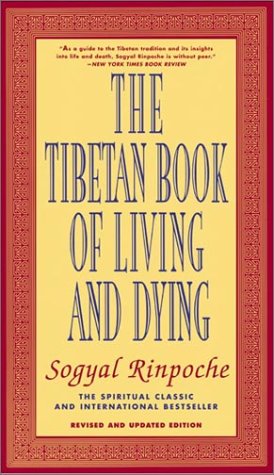
5.  “The Tibetan Book of Living and Dying” by Sogyal Rinpoche – Again, the whole Eastern spirituality thing.

6.  “The Stranger” by Albert Camus – The lead characters of my film at times question the purpose of their existence, whether they ever say this out loud or not. So I thought a little dose of existentialism was in order.

7.  “The Gnostic Gospels” by Elaine Pagels – I wanted to explore the intersection of Western and Eastern spirituality so the Gnostics seemed to be the way to go.

8.  “Psychological Types” by Carl Gustav Jung – The film also explores introversion versus extroversion so I wanted to bone up on psychological types and archetypes and nobody does that better than Carl Jung. Also, for any script, I think it’s a good exercise to break down which personality type fits each character. It really illuminates how and why they operate in the world.

9.  “Bhagavad Gita” – Are you sensing a trend?

10.  “Cinematic Storytelling” by Jennifer Van Sijll – I find this book to be an extremely helpful and practical guide for storyboards and shot ideas. It integrates the visual psychology of various styles of shots, so it’s very useful brainstorming tool to start the process.

11.  “The Koran” – Okay, you get the picture. But actually, “The Koran” has a very different take of religiosity and spirituality than the others and I wanted to get the perspective of a stridently monotheistic religion.

12.  “The Epic of Gilgamesh” by Anonymous – This account of a warrior friendship that ultimately leads to the realization of the fragility and mortality of the human body is even more profound than “The Iliad” to me. Its poetic exploration of friendship relates to some of the issues that the friends in my screenplay face down. It’s fascinating to read about these two men dealing with a very similar conflict thousands of years ago. The more things change, the more things stay the same.

If you take a break to read a bunch of books, some might say you’re just procrastinating. And they might be right. But on the other hand, I find that the best type of creativity can’t be forced.  It has to be coaxed. And ingesting new inspiration can suddenly pay off in ways you don’t expect. I feel like I haven’t been rewriting at all the last two or three weeks. I’ve been obsessed with starting this blog and with finishing editing on “Dumbass Filmmakers!” Then all of a sudden, literally right as I was falling asleep at around 2 a.m., I thought of an idea to solve the problem in the second act that bugs me the most. I’m not sure where that idea came from, but I’m pretty sure my dedication to research had something to do with it. I just can’t prove it yet.

Image

—

Hunter Lee Hughes is a filmmaker living and working in Los Angeles and the founder of Fatelink. His current feature film Guys Reading Poems is touring film festivals and this blog is dedicated to the process of making his second feature film, “Inside-Out, Outside-In.” If you enjoy the blog, please support our team by following us on Facebook, Twitter (@Fatelink) or Instagram (@Fatelink).

Share this:

  • Share on Facebook (Opens in new window) Facebook
  • Share on X (Opens in new window) X
  • Share on Tumblr (Opens in new window) Tumblr
  • Share on LinkedIn (Opens in new window) LinkedIn
Like Loading...
Newer posts →

Recent Posts

  • We’ve moved!
  • Co-Creating With Your “Audience”
  • The Voice of Your Film
  • New Film Distribution Models – 7 Ideas
  • The Duty of the Artist

Archives

  • December 2018
  • January 2017
  • October 2016
  • September 2016
  • February 2015
  • January 2015
  • December 2014
  • November 2014
  • June 2013
  • April 2013
  • March 2013
  • February 2013
  • January 2013
  • December 2012
  • November 2012
  • October 2012
  • August 2012
  • July 2012
  • May 2012
  • April 2012
  • March 2012

Categories

  • Budgeting
  • Casting
  • Development
  • Financing
  • Interviews
  • Post-Production
  • Pre-Production
  • Production
  • Release
  • Scheduling
  • The Script
  • Uncategorized
  • Wardrobe

Connect with us….

Connect with us….

Twitter Updates

Tweets by fatelink

Blog at WordPress.com.

Privacy & Cookies: This site uses cookies. By continuing to use this website, you agree to their use.
To find out more, including how to control cookies, see here: Cookie Policy
  • Subscribe Subscribed
    • Inside-Out, Outside-In
    • Join 43 other subscribers
    • Already have a WordPress.com account? Log in now.
    • Inside-Out, Outside-In
    • Subscribe Subscribed
    • Sign up
    • Log in
    • Report this content
    • View site in Reader
    • Manage subscriptions
    • Collapse this bar
 

Loading Comments...
 

    %d