• About
  • Contact Us…

Inside-Out, Outside-In

~ Every journey worth taking…starts on the inside.

Inside-Out, Outside-In

Category Archives: Development

Top Ten Things I Learned at Digital Entertainment Hollywood ’12

14 Monday May 2012

Posted by hunterlh in Development

≈ Leave a comment

Tags

cable, convergence, Digital Entertainment Hollywood, dumbass filmmakers!, hunter lee hughes, inside-out, internet television, internet tv, ipad, metadata, outside-in, secondary devices, Top Ten Things I learned at digital entertainment hollywood, transmedia, tribune media services

On the spur of the moment, I decided to attend the four-day Digital Entertainment Hollywood event at the scenic Ritz Carlton hotel in Marina del Rey. Good call. Met a ton of cool hyphenates as well as some movers and shakers in the world of transmedia and multi-platform entertainment (note: it’s no longer new media for those who’re keeping score.). I’m still digesting what I learned and how it applies to an indie feature film, but one thing is certain – the emergence of new technologies, platforms and power distributors is changing the landscape of film.  Here’s some of what I learned.

1. Once convergence happens, some will win and some will lose. The sentiment among Digital Entertainment Hollywood is that a convergence of television and Internet-based entertainment is going to happen. So just how powerful could the 97 companies given “premium” channels on YouTube turn out to be? Good question, but they’re certainly, at minimum, in a great position to take advantage. So growing your following on YouTube, Vimeo and whatever platforms you believe in could be a huge, worthwhile investment in your future as a filmmaker. Imagine if your subscribers can eventually flip to your custom channel just like they flip to NBC. Better build that following right now before others beat you to it.

2. People don’t just watch television.  They watch television and use a secondary device at the same time.  One of the esteemed panelists quoted a recent study that found that 63% of television viewers used a secondary device while watching television. Whether it’s an iPhone, iPad or other smart phone, the big boys are already making content to capture viewers in both places – at once (think “Walking Dead”). If you have content available on a secondary device, you might just keep your viewer’s attention (albeit split over two devices) rather than losing them to Facebook, their texts or whatever else they’re doing. As an indie filmmaker, it means re-thinking that bonus DVD footage to something that might be consumed on a secondary device while they watch your movie. So don’t just create DVD bonus extras, create character breakdowns or photo artwork that adds to the experience of watching the film.

3. Different demographics use the same technology differently. Some content or app creators fall into the trap of simply designing something for the iPad. Well, teenage girls use the iPad very different than senior citizens (many of whom do actually own iPads). So it’s important to think in terms of the demographic, not just the device.

4. When you’re on a panel, keep in mind to warn people when you show explicit content. Okay, so this has more to do with social skills than transmedia, but I got pretty annoyed at one of the panelists when a video game developer showed their 3D video game complete with U.S. soldiers getting shot and dying in what looked like a desert war zone. Now, how could the panelist know that I have a brother serving in Afghanistan right now? But still…if you have content that some might find objectionable or disturbing, you need to warn them before you play it. While I realize that video games are huge, not all of us are prepared to see that sort of violence without a warning.

5. When the character calls, your phone will ring. One content creator has developed a way for audiences to register before they watch the content. Then, when the character receives a phone call on screen, guess what? Your own cell phone rings and the actress yells at you, in addition to the character. When the character receives a text message that a bomb is exploding, you receive the same text message on your own phone. Kinda creepy and cool at the same time and goes to show you how technology is going to keep impacting the experience of consuming content.

6. Putting yourself out there is hard work and the results aren’t always immediate. I must’ve pitched my webseries “Dumbass Filmmakers!” more than a hundred times at the conference and, sure, it would’ve been nice to find an awesome distributor, agent or manager. However, knowing that I’m also building “Inside-Out, Outside-In” and am in the game as an actor-filmmaker for LIFE (sounds like a prison sentence), I tried to take the long view. There’s no need to annoy people with a hard sell now. Hopefully, these are folks that will get to know Fatelink and my work over many years and now I at least have an excuse to contact them with updates and they’ll look a little more familiar at the next conference.

7. Never follow-up with someone without spending 10 minutes on their website. I met an awesome guy at the conference and exchanged cards. I was excited to see him again and dashed off an email, making a joke about how he understood Chinese (his card included traditional Chinese characters).  Guess what? It was Japanese.  Totally embarrassing.  Luckily he forgave me, but a little digging on my part could’ve prevented the mishap.

8. It’s about attracting the Never-Used’s.  There are a lot of savvy transmedia people who’ve cancelled their cable subscription and rely mainly on the Internet for television (myself included), so we tend to think the whole world is trending that way. According to the first panel I attended, that’s just not the case. Many people who cancelled cable did so out of financial pressures and probably will resume their subscriptions as their economic fortunes improve. That’s not good for Internet TV producers. However, there’s a silver lining. Some young people getting out of college have struck out on their own and never used cable at all, at least in terms of paying for it themselves. So these groups will be much harder customers for cable to win over. If Internet TV producers can capture this demographic, that’s some serious leverage going forward.

9. What is metadata and how does it apply to the Web shows?  Metadata is data about data. If you do subscribe to cable or IMDb, you may notice that some systems can recommend programming for you based on your previous selections or ratings. They also provide information about the director, actors, etc. The biggest gatherer of metadata for the entertainment business is Tribune Media Services and guess what? According to one of their executives, they’re developing a prototype to gather metadata about online shows and entertainment. I spoke with one of the executive there and she said they’re just trying to figure out where the threshold should be in terms of which shows and actors to track. They only want the most meaningful data, not clutter. Being listed in the metadata of Tribune Media Services is powerful, so I’m curious how many transmedia players they’ll end up tracking.

10. Whenever you go to a conference at a hotel, bring a banana and stop by Starbuck’s right before you arrive.  Seriously. The hotel charges a fortune for stuff like that.

Hunter Lee Hughes is a filmmaker and actor living and working in Los Angeles and the founder of Fatelink. His current feature film Guys Reading Poems is touring film festivals and this blog is dedicated to the process of making his second feature film, “Inside-Out, Outside-In.” If you enjoy the blog, please support our team by following us on Facebook, Twitter (@Fatelink) or Instagram (@Fatelink).

Share this:

  • Share on Facebook (Opens in new window) Facebook
  • Share on X (Opens in new window) X
  • Share on Tumblr (Opens in new window) Tumblr
  • Share on LinkedIn (Opens in new window) LinkedIn
Like Loading...

Developing your Micro-budget Film Business Plan (note: it’s hard work, Elizabeth Banks)

26 Thursday Apr 2012

Posted by hunterlh in Development

≈ 2 Comments

Tags

Elizabeth Banks, film budgeting, film business plan, hunter lee hughes, inside-out-outside-in, investors for movie, Kevin DiNovis, movie business plan, Slamdance, Surrender Dorothy

Thanks to all of you for supporting this blog so far! I’m thrilled that the last two postings charting my stupidity/smarts with previous projects have both cracked 100 readers! This is quite a step up from the first few postings, which were viewed by maybe four or five people each. Wow. Just like an indie film, a blog gets built little-by-little.

Today, I’m sweating it a little bit because I’ve scheduled my first meeting with a potential investor for ‘Inside-Out, Outside-In.’ And, truth be told, I’m still working on developing the business plan to give him tomorrow. Sometimes life unfolds at a slightly faster pace than you anticipate. Many elements still need to come together and – most especially – the sales projections for my film (will be headed down to the Margaret Herrick Library in a bit to do some research on foreign sales numbers for movies in my category). So for all those who think making indie films is a walk in the park (take note Elizabeth Banks), it all starts with boring business plans and trips to the library.

I would love to report a positive development after tomorrow’s meeting. Until then, since this is a blog about us learning together about indie films, I thought I’d include the tentative list of topics I plan to include in the business plan.  They are:

1. Introduction

2. Synopsis (one page)

3. Filmmaker Biography

4. Target Audience Report

5. Budget Synopsis

6. Financing Plan

7. Distribution Plan

8. Marketing Plan

9. Sales Projections

10. Call to Action

11. One Sheet mock-up

12. Statement of Risk

I’ve made the decision to include only a one-page synopsis and a one-page budget summary because – from what I understand – investors are busy people and only have a very limited amount of time to consider your proposal.  I will also pull together a packet of supporting material available to email the investor – if interested – that will include the five-page treatment, the full budget and more information/documentation about the performance of my past projects.

Oh and on behalf of my hard-working independent film friends, I’d like to go ahead and note the douchebag-of-the-week: Elizabeth Banks. In a really classless move, she criticized Kevin DiNovis, the first filmmaker to give her a lead role in his indie film ‘Surrender Dorothy’ (which by the way won Slamdance and the NY Underground Film Festival and won praise from Roger Ebert). In an April 19th interview with Slate.com, not only did she describe the film as her worst career mistake, she went on to say she wasn’t even sure of the title of her first feature film.  Elizabeth: “Really early on, I did this one film – I think it’s called ‘Surrender, Dorothy,’ I’m not even sure anymore….” Now Elizabeth, you don’t remember the name of your first film??? Really, now.  Can we say ‘Passive-aggressive?’ She goes on to insult the director who gave her a big break even further by saying of her experience on the film, “I thought, ‘I’d better go to drama school and learn how to never have this job again.'” Wow.

You heard it here first.  Elizabeth Banks sure comes across as an ungrateful 1%’er with little to no respect for the incredible hard work involved in indie filmmaking. If this was some student film that truly was awful, maybe I’d understand. But to trash your debut film that went on to win Slamdance? Out-of-touch Hollywood elite all the way.  Boo!!!!  Have some class and apologize to Kevin and indie film, Elizabeth…don’t worry, we’re a forgiving bunch.

For those of us who still have to work in the real world, business plans are very important (even if they come together at the last minute). Will keep you all posted. See you at the library!

Hunter Lee Hughes is a filmmaker and actor living and working in Los Angeles and the founder of Fatelink. His current feature film Guys Reading Poems is touring film festivals and this blog is dedicated to the process of making his second feature film, “Inside-Out, Outside-In.” If you enjoy the blog, please support our team by following us on Facebook, Twitter (@Fatelink) or Instagram (@Fatelink).
Share this:

  • Share on Facebook (Opens in new window) Facebook
  • Share on X (Opens in new window) X
  • Share on Tumblr (Opens in new window) Tumblr
  • Share on LinkedIn (Opens in new window) LinkedIn
Like Loading...

Top Five Stupid and Smart Things I Did Producing my First Play

23 Monday Apr 2012

Posted by hunterlh in Development

≈ 3 Comments

Tags

apology, biggest producing mistakes with plays, Cody Bayne, Fate of the Monarchs, giving credit, highways performance space, hunter lee hughes, multi-media, one man show, Patrick Kennelly, top five stupid and smart things producing a first play

Ramping up for the biggest project I’ve ever undertaken has inspired me to look back at the beginning of my career to really assess what I’ve learned along the way.  I often find the difference between marginally successful people and extremely successful people is an ability to really integrate their life lessons to avoid mistakes they’ve already made and build on successes they already understand.  You may ask, ‘What does producing a play have to do with producing a feature film?’ Although the tasks seem very different, some important similarities stand out.  They are both long-form creative projects with a beginning, middle and an end that require a team of storytellers and crew to pull off.

I wrote “Fate of the Monarchs” as a 24-year old battling severe depression after a romantic let-down. I basically didn’t leave my studio apartment in Koreatown for about a month. After a couple days straight of watching ants take over my kitchen, I decided – for almost no discernible reason – to head to my local library branch. A striking image of a monarch butterfly wing on the book cover of “Four Wings and a Prayer” by Sue Halpern grabbed my attention. Within a few hours, the depression had started to shift as I learned that creatures with a one-inch body and three-inch wingspan traverse literally thousands of miles for reasons even scientists do not fully understand. The monarch migration served as the symbolic landscape of the journey of five interconnected men in search of spiritual meaning in my very first original play. I’m still extremely proud of the writing and what our team pulled off.

That said, I did some stupid stuff.  And some smart stuff.  Let’s start with the stupid.

Five Stupid Things I Did Producing my First Play:

1.  Not Giving My Director Enough Credit – Back then, my manager-at-the-time Al Trombetta referred me to Cody Bayne when I started looking for a director for the piece. Cody started a theatre collective in his home state of Tennessee and still creates amazing themed events for different bars around town in addition to working as a painter, writer and film producer. He came onboard the project and had a brilliant idea to include a multi-media element into the piece (more on this in the smart section).  Anyway, let’s cut to when the show came out. Cody – very reasonably – asked me to make it explicit in the press release that he came up with the idea for the multi-media aspect. I drug my feet on it out of pretty much sheer ego. Then a brilliant review came out which basically gave me credit not only for great writing and acting, but also for the multi-media aspect of the show. I immediately felt so much shame. Later that day, I changed the press release per Cody’s request and apologized to him. Luckily, Cody’s an amazing man and forgave me and we went on to share a great friendship as well as working relationship. Even in doing a spiritual piece, I’m not excluded from a rush of ego wanting more, more, more. All artists should be aware of this. It is a dark aspect of being an artist that most of us need credit and validation, especially because our job is so difficult and – very often – so underpaid. But making sure other collaborators get their due is part of being a responsible artist. This is one lesson I learned the hard way by messing up and overreaching.

2.  Not seeing enough other one-man shows/alternative theatre – “Fate of the Monarchs” was one of the biggest career successes I’d had.  Yet because I framed it as an artistic venture, I wasn’t prepared for how to capitalize on it and grow my career. I had seen very few other one-person shows before mine premiered and I didn’t have very strong ties to the alternative theatre community in Los Angeles and beyond. If I had to do it again, I would stop in and watch an alternative theatre piece in each town I visited to meet more artistic directors. I would’ve patronized more shows by other artists to be part of a community so that when my show was well-received, I would have more knowledgeable peers to support any potential expansion.

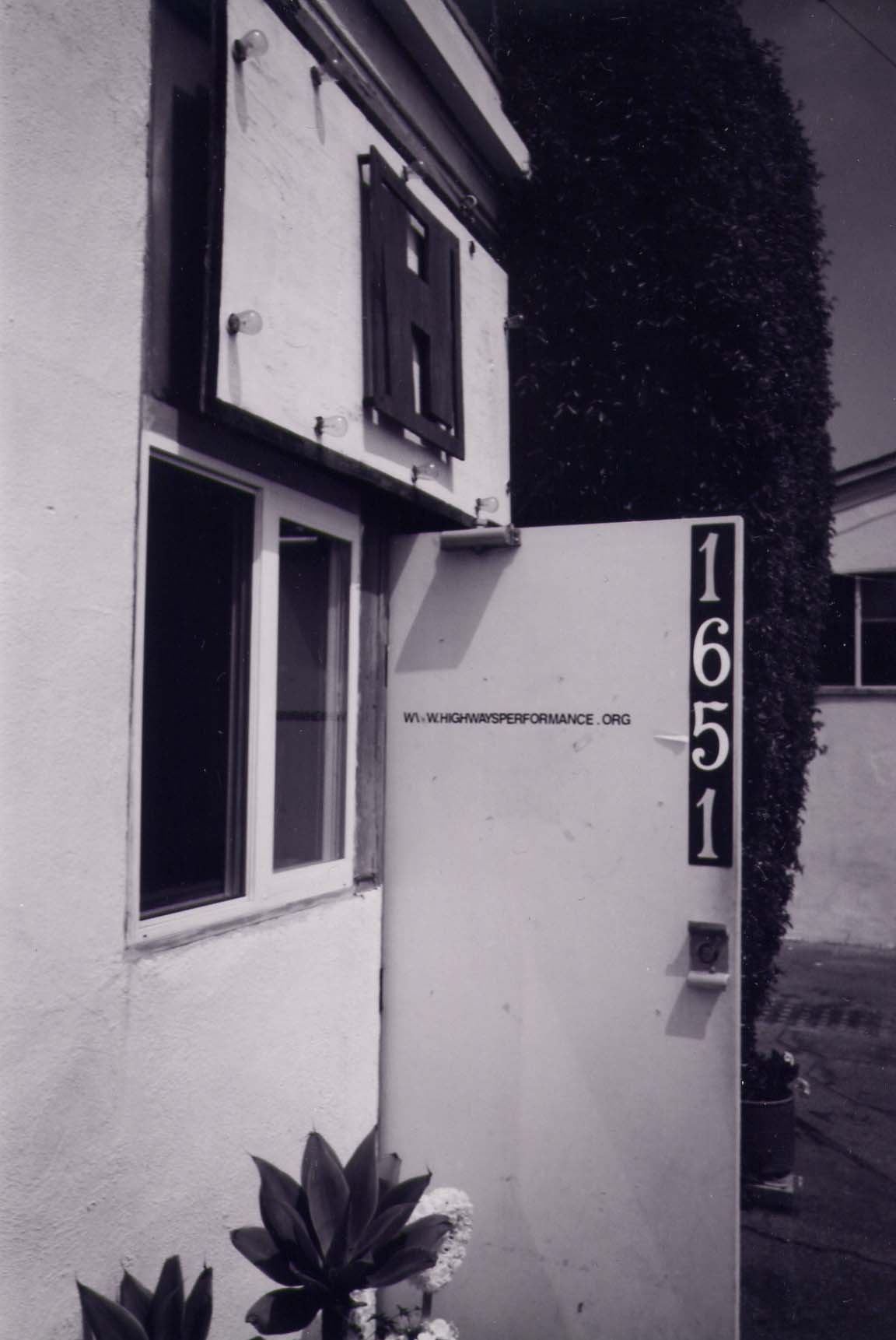
3.  Not getting clarity from a co-production deal up front – The show was produced a total of six times and I had a great experience with all the co-production deals we struck, especially with Highways Performance Space and the Ragged Blade theater group in St. Louis. However, one time, I did have to scramble for a solution based on a misunderstanding. I believed the theatre was supplying the space for free in exchange for a split in ticket sales. Turns out, they expected me to pay a (somewhat reduced) rental fee, although they did provide production support, a press agent and a producer to help out. It was still a great deal and I would’ve gone forward no matter what. But not being clear that I was going to need to pay for rental space sent me scrambling to my checkbook and living on the edge financially for a few months. Had I been more clear up-front, I could’ve handled that money situation better. Even when you have a verbal offer with a promise of a contract, you might want to shoot an email with the main points of the contract to make sure you understand. But don’t be overbearing about it!

4. Not keeping up with those “close calls.” – After our initial run, I sent a 10-page dialogue sample to the Public Theater and – to my astonishment – they wrote back and requested the full manuscript. Sundance also ran a competition for plays and I received a handwritten note from the programmer saying he enjoyed the piece but had to pass for now. Sadly, the Public Theater also ultimately ended up rejecting my work, but listed some contact information and asked me to send more writing in the future. Stupidly, I never have. If I could do it again, I would send Sundance and the Public Theater project updates for all the productions of ‘Fate of the Monarchs’ and should have kept applying with new, original pieces. After all, it’s a huge risk for these places to support an unpublished author so it makes sense that it’s an uphill climb to get in on the first shot. But my mistake was not building on the close calls from the past as my career progressed. Now, it’s been a number of years since I applied to the theater circuit and many of the names in the game have changed, so the potency of re-introducing myself is probably not as strong.

5. Over-marketing to friends – Most beginning artists feel like their immediate family and friends are a natural first audience to build a solid base of support for our creative work. And, indeed, there’s some truth in that (who else is gonna see your band’s first gig at a coffee shop?). But I overdid it a little with “Fate of the Monarchs.”  On the one hand, I was pleased with how many people turned out for the show. On the other hand, I sent out an email, a follow-up email and a reminder email to practically all my friends…and acquaintances…and people I’d met once a few years back. I got one email response whose subject was, “Email Etiquette.” Ouch. While I commend the younger me’s go-get-’em spirit, I do now feel that it’s better to build your audience based on mutual taste/experiences rather that first degree friendships. That’s not to say I would never send out a mass email ever again. But I probably won’t. And if I do, it would be once during the entire life of the project. So don’t Spam Folder, me…please… 🙂

Okay, so I’m totally glowing red from revealing how stupid I was in many ways, but younger Hunter was pretty smart about some stuff, too.

Top Five Smart Things I Did Producing my First Play:

1. Signing off on multi-media element and limiting the budget.  Aside from the mini-drama of credit over the multi-media idea, it was a good idea for me to say, “Yes” to Cody’s flash of inspiration to create a video element of the show. Also, I was smart to give him a fixed amount of money – $300 in cash – and let him know that was all I could afford. I made the decision to trust him with this element and not micromanage. I didn’t even show up when they shot it or sit in on editing sessions. By being hands off, Cody felt secure that I believed in him as a director and invested in the project in a deeper way. And I got to spend more time developing the acting and writing.

2. Hiring Patrick Kennelly as our videographer/editor. Cody did need a collaborator to help pull off the video element of the show and I facilitated hiring Patrick Kennelly, at the time a 20-year old wonder kid of sorts who interned at Highways Performance Space (he’s now co-artistic director there). At the time, artistic director Leo Garcia highly recommend Patrick, an extremely talented youngster without a huge track record (largely because he was, like, 20). It was a win-win-win-win situation for everybody involved. Patrick served Cody’s vision on the video elements, but he also helped our artistic director become even more excited by the piece. And the show was a boon to Patrick too because he got some hands-on experience creating a video installation-type element without being 100% responsible for the piece as a whole (Patrick has gone on to create very unique installation pieces and theater experiences, such as the upcoming religious rival PATTY). Patrick’s work shooting the video and then editing it was incredibly time-intensive and crucial to the success of the piece as a whole. So bringing him on-board was a smart move all around.

3.  Creating a piece that required little outside help.  Despite the crucial efforts of Cody and Patrick, “Fate of the Monarchs” didn’t have a whole lot of moving parts. It was a one-man show, so there were no other actors to coordinate. The crew was extremely limited. This worked out terrifically well because I was able to focus on developing the writing and acting, while keeping the logistical challenges to a minimum. Once you add even a couple more actors and a couple more crew people, things get complicated quickly. Someone cancels for a key rehearsal. Someone else quits. Someone shows up drunk and takes off all their clothes (just kidding on that one…sort of). For a first effort, it was actually super-smart to choose a one-man show, not only to expunge any demons in a raw and personal way, but also to keep the producing task to a manageable level.

4. Taking advantage of co-production deals. I’ll always be grateful to Leo Garcia at Highways Performance Space for allowing us two runs of ‘Fate of the Monarchs.’ The piece simply wouldn’t have been accepted at the same level without patronage from Highways’ built-in audience and support from Leo and his staff. I went on to strike several more co-production deals with highly positive results (the blip described above about one incident notwithstanding). My advice to up-and-coming theatre artists is to get connected to spaces in their area that might curate or support new work…and patronize them. If you’re at all into the LGBT theatre scene and live in the Southern California area, that means supporting Highways, who’ve broken more than a few new artists, thankfully!

5. Producing something out of urgency rather than intellectual curiosity or people-pleasing or the pursuit of money/power/prestige. I find that today’s young artists obsess far too early on about whether or not their work will be accepted by the “right people” (who exactly are they anyway?). So, sometimes, they create their first works from the ethos of “trying to look super smart” or “giving the art world something completely new and original” or “creating a hit in the marketplace.” Of course, the specifics of the material applied to those mindsets vary, depending on whether the work is intended to gain favor in the indie filmmaking community or the alternative theater community or the fine arts community or even the traditional Hollywood community. But a result-driven point of view can be very damaging to artists especially if it hardens into the bad habit of valuing external approval over personal authenticity. ‘Fate of the Monarchs’ came from my urgent personal need to explore the spiritual meaning of a so-called “alternative” sexuality and its particular slings and arrows as applied to romantic love. Indeed, getting out of that severe depression depended on it. By nurturing the paradoxical image of fragility and endurance inherent in migrating monarchs synchronistically given to me, I started my journey as a content creator connected to my own core questions and concerns about the human experience. It’s only from there that real growth as an artist is possible – at least that’s what I believe.

Okay, so that’s it for the stupid/smart things I did with regards to my first play. Next time, I’ll share whether or not I learned anything by the time the second play came into existence (you might be surprised). Thanks for reading and sharing! 🙂

—

Hunter Lee Hughes is a filmmaker living and working in Los Angeles and the founder of Fatelink. His current feature film Guys Reading Poems is touring film festivals and this blog is dedicated to the process of making his second feature film, “Inside-Out, Outside-In.” If you enjoy the blog, please support our team by following us on Facebook, Twitter (@Fatelink) or Instagram (@Fatelink).

Share this:

  • Share on Facebook (Opens in new window) Facebook
  • Share on X (Opens in new window) X
  • Share on Tumblr (Opens in new window) Tumblr
  • Share on LinkedIn (Opens in new window) LinkedIn
Like Loading...

Top Five Smart and Stupid Things I did Producing my Short Film

17 Tuesday Apr 2012

Posted by hunterlh in Development

≈ Leave a comment

Tags

alec mapa, atlanta film festival, camille carida, elizabeth gordon, film festivals, filmmaking, how to make a better short film, hunter lee hughes, hyphenates, independent filmmaking, john matysiak, pitfalls of producing a short film, producing a short film, top five smart and stupid things i did producing my short film, winner takes all

As I continue to develop my feature film script and prepare for the craziness of development/pre-production/production etc., it’s sometimes helpful to look back and remember the lessons of the past.  After all, that’s why I learned them, right? And perhaps no other project taught me more than ‘Winner Takes All,’ for which I juggled duties as writer, producer and lead actor (power to the hyphenates!!!).

‘Winner Takes All‘ was shot in December, 2009, took a year and a half to edit (eventually clocking in at 17 minutes) and premiered at the Atlanta Film Festival in April, 2011.  It went on to gain acceptance into ten international film festivals and secured distribution through Guest House Films’ dark-themed collection called, ‘Black Briefs.’  Ever the perfectionist, at one point, I wanted the film to get into Sundance, 50+ film festivals, win an Oscar, take over the world and make me a mega filmmaker/actor hyphenate.  However, once reality set in and my ego faced the stark truth that there are thousands of shorts made every year (and hundreds and hundreds of really good ones….), I became satisfied with what we accomplished. But more than the outer accomplishments were the valuable lessons learned about what we did both right and wrong.  I’ll start with the stupid side.

Five Stupid Things I Did Producing ‘Winner Takes All’

1.  Underestimating the importance of the ‘smaller’ departments.  One horrendous day on the set, we went into overtime.  This is pretty much death for an indie short because we had to shell out extra money for our cast and crew and order a second meal. Although we had to do it, the overtime was completely avoidable….had we only paid more attention to two departments – costumes and make-up.  Why did we go into overtime? One of our lead actors could not find the suede pants established as so critical for his character and we did not have anyone from the costume department on hand to organize the clothes and make sure the actors had all their outfits as needed.  We figured, ‘Hey we only have four actors and each actor only has one outfit.  We don’t need a wardrobe department on set.’  The costume (which was eventually found tucked away in a second bathroom no one knew was there) took three hours to find. By that time, the camera crew had to change the lighting set-up they had planned, re-light and flip around to get another character’s coverage. (Another lesson – if you think actors will be responsible for their own costumes, you are wrong). Making matters worse, this was also the day our make-up artist arrived two-and-a-half hours late.  We didn’t have a rolodex of other make-up artists available and because she was the ONLY one in her department, we simply had to wait.  We spent SO much time organizing the camera crew, the equipment, the insurance, the permit, the meals that we neglected to remember just how important these ‘small’ departments are on a film set.  And boy did it cost us overtime dollars.  On a film set, there are no ‘small’ departments.

2.  Not investing in a cash box.  We ended up having more than $300 stolen from a rehearsal and later had to work double-time to track down all the receipts from people in all different departments, from craft services to production design.  I truly believe the theft and the receipt hassle would’ve been solved had we invested from the beginning in a small cash box with a sign-in/sign-out sheet for all the petty cash.  When you give people cash, they tend to just think of it as money in their pocket.  When they are forced to sign-out for the cash they receive and know they’ll have to sign-in once more with receipts to accompany the change, they take it seriously.  A fifteen dollar cash box would’ve saved time and money on our production.

3.  Applying to film festivals with a rough cut.  Sometimes you are told that film festivals are used to rough cuts, that they can see past any audio/color correction problems. Maybe if you’re Woody Allen or Terrence Malick.  If you’re newer to the festival circuit, I would never, ever apply with any sort of rough cut.  Why? With ‘Winner Takes All,’ we applied to a big festival that was sort of “shooting for the stars” with a rough cut and didn’t get in.  Later on, once we had a finished version, we applied to another festival that I thought was the PERFECT fit for our film.  Guess what?  We still didn’t get in. Of course, there could be a million reasons why but I couldn’t help but notice that the main programmer of the “shooting for the stars” festival was the SAME PERSON that later declined our finished version for the “Perfect Fit” festival.  I truly believe the person may’ve thought they saw the film once in a rough cut form and didn’t need to see it again, robbing us of a chance to make a great first impression with the finished piece. Remember, these festival programmers don’t just work for one festival.  They work for several and once they see your film, they’ve seen it.  So make sure they don’t first see it as a rough cut.

4.  Not Having a Plan to Manage Stress.  As a filmmaking hyphenate, you will face an extraordinary amount of stress and unexpected stress should be factored into a plan to take care of yourself emotionally, physically and spiritually during the process.  Three days before production started, my wallet was stolen, which included the company credit card to which all our equipment, insurance and expenses were charged. My identification was gone. Everything. On top of learning lines, organizing equipment and dealing with all sorts of new people and personalities, this sent me over the top with stress and some of it was avoidable. If I could do it again, I would pre-plan a massage just before production. By the time I shot my webseries, I knew that I would take the first twenty minutes of every lunch break to meditate and take quiet time no matter how many of the cast and crew members wanted to talk.  Have some fun distractions like an iPhone game or app that helps you unwind and make a plan to play it, even if you don’t feel like it in the moment.  Or if you have a romantic partner, let them know you might need some mindless nookie one night of the production just to have some stress release.  And let any romantic interest know up front that for the length of the shoot, you won’t be available to emotionally caretake or solve anything sticky in your relationship.  It’s just too much to ask of yourself.  In indie filmmaking, stress always takes a toll and it’s part of the beast you must face, but manageable stress feels a lot different to the body than unmanageable stress.

5.  Not understanding the difference between an editor and a post-production supervisor. Our first editor was a close friend of mine who had won an Emmy for her editing on a reality television show. She was highly qualified to edit the film based not only on her television work, but on her narrative work in the past.  However, she was not used to dealing with workflow issues.  In her office, the footage just appeared in her editing suite and she went to work and did a fantastic job. We were basically expecting her to serve not only as an editor, but also as a post-production supervisor.  This was especially unreasonable since we were dealing with Red footage, which at that time was considered a super-beast to deal with in Post. She eventually left the project because of other family and career obligations, but we got the message and hired a post-production supervisor (who ironically enough, ended up being our editor). But still, we should’ve had a post-production supervisor from day one to help establish the post workflow, especially knowing the difficulty of dealing with Red footage. It would have saved us heartache and made for a happier editor.  So be aware of who your editor is and if you’re going to expect them to function as a post-production supervisor, that should be clear with them and – unless they’re you’re bestie or doing a huge favor – they should be compensated and credited extra for performing more than one function.

Okay, so there are the stupid things I did. Here are the smart ones:

1. Hiring a director that shared my values about acting and the creative process. I desperately wanted to learn how to direct, but I intuitively knew that writing, producing and acting was more than enough to handle on my first outing of this scale. We had a number of choices in terms of who to choose as director, but we went with Camille Carida, a smart decision. She shared the most important values you can share as creative collaborators – a similar emphasis on what is important about the lives of human beings and how they are to be explored in an artistic venture.

2. Hiring with balance in terms of other key collaborators.  As a producer, I wanted Camille to feel comfortable with her d.p., but I also wanted to highlight choices that balanced out her strengths and weaknesses.  She was strong in creating performances and understanding and executing the theatricality of the piece.  The eventual d.p. John Matysiak has an uber-cool, perfectionist approach to the visuals which balanced out Camille being newer to shotmaking.  We tried to echo this balance throughout our hiring process.  We are excited to take chances with newer people in some departments, but would not take newer people for EVERY department.

3. Investing in High Production Value.  I saw ‘Winner Takes All’ as my own version of film school and spent quite a bit of money doing it.  Because there are so many shorts being produced and so many shorts competing for slots in festivals, I mitigated my risk in terms of inexperience with spending money for high production value.  I don’t recommend this strategy for every new producer.  And in truth, I had produced two uber-low-budget shorts that I didn’t feel comfortable submitting to festivals. But I don’t regret spending the money on high production value for ‘Winner Takes All.’  It helped give us an edge in competing for those slots – our high production value is still noted by almost everyone who sees the film. And it helps the film stand out as an enduring calling card. Since I learned so much on ‘Winner Takes All,’ I didn’t feel the need to invest in high production value as much the next time around but for this first big effort, it was crucial.

4. Selecting a film with one location. Our film took place entirely in a theater, which gave some much needed stability to our shoot. My producing partner Elizabeth Gordon and I considered producing a different short film, but we decided that the film with only one location would be a good hedge against our relative inexperience as film producers.  Turns out, we were right.  Between the wallet being stolen and all the other problems that came up, we desperately needed something steady and secure. The fact that everyone could show up to the same location, park in the same lot and keep the equipment in the same place was a very needed boost of stability. Plus, we got a number of different looks within the theatre — on stage, in the audience, in the light booth – so we still managed to do pretty well in terms of visual variety.

5. Going for it with Alec Mapa.  We really wanted someone amazing to play Simon. After a bit of a process bouncing ideas with Camille, Elizabeth and our casting director David S. Zimmerman, we felt strongly that Alec Mapa would be an amazing choice for the piece (and he was). In the LGBT world, Alec is definitely a celebrity and not someone that I knew personally. However, David did have friends from his time living in San Francisco that knew Alec. David arranged for them to approach Alec, who gave the go-ahead for us to call his agent. Then, we simply offered him the part. I wasn’t even sure of the protocol for doing something like that, but just got through it, with a little help. It worked. Within a day, Alec’s agent requested the script. Within two days, we made a deal and he came onboard the project. Alec’s terrific performance brought a lot of value to our film to the degree that other filmmakers approached me and asked me how we landed him. The answer was really surprisingly simple – we asked.

Okay, so those were some smart and stupid things I did producing ‘Winner Takes All.’  In the next week, I’ll take you even further back to show you some stupid/smart things I learned producing two plays and also investigate some stupid/smart things I did directing my first project.

—

Hunter Lee Hughes is a filmmaker living and working in Los Angeles and the founder of Fatelink. His current feature film Guys Reading Poems is touring film festivals and this blog is dedicated to the process of making his second feature film, “Inside-Out, Outside-In.” If you enjoy the blog, please support our team by following us on Facebook, Twitter (@Fatelink) or Instagram (@Fatelink).
Share this:

  • Share on Facebook (Opens in new window) Facebook
  • Share on X (Opens in new window) X
  • Share on Tumblr (Opens in new window) Tumblr
  • Share on LinkedIn (Opens in new window) LinkedIn
Like Loading...

Hunter vs. Homophobia: Launching the first workshop of ‘Inside-Out, Outside-In’

04 Wednesday Apr 2012

Posted by hunterlh in Development

≈ Leave a comment

Tags

acting school, choreography in movies, gay mafia, gay sexuality, gay sexuality in the movies, homoerotic, homoerotic content, homoerotic movies, homophobia, homophobia in Hollywood, hunter lee hughes, inside-out, Jamie Jeppe Benson, outside-in, workshopping feature film

Just last night, I witnessed a well-done bedroom scene between a man and woman that included the man sheepishly commandeering a pillow to cover his character’s…well… excitement.  The audience appreciated the chemistry between the two attractive actors and heartily applauded at the scene’s end…and rightfully so.  Yet, hard-won experience over the years has shown me that had the scene been between two men rather than a man and a woman, the audience’s reaction might not have been so fully and completely generous.  (If it had been between two women….well…the audience may have been even more generous, but that’s another story).

That’s why I was slightly anxious when I first approached a Nameless Actor to workshop a scene with me from ‘Inside-Out, Outside-In.’ He looked like the part and had just completed a commendable performance in a scene with a mutual friend.  But that scene and my project were quite different.

The climatic scene in ‘Inside-Out, Outside-In’ includes some homoerotic friction expressed through choreography being acted out between a gay director and his straight male leading man. There was no kissing or removal of shirts or underwear or bedroom antics (no pillow, certainly), but still, the piece did include some choreography between the characters that you might see on ‘Dancing with the Stars.’  If it were a scene between a man and a woman, I’m sure it wouldn’t be considered very racy compared to some of the barely-clothed encounters I’ve seen at the studio over the years.  But – for some reason – I didn’t feel like I was approaching Nameless Actor with an exciting opportunity so much as a challenge.  I grumbled internally that someone as “evolved” as me still had remnants of internal homophobia and yet, approach him I did.

I explained to Nameless Actor right away that I was returning to the studio with the purpose of workshopping my feature script and described its homoerotic content.  Better to be upfront, I thought. So I detailed the set-up of the scene and went over the general nature of the choreography.  I offered to send the script for him to consider, but he insisted that it wasn’t necessary.  He still remembered the last scene I’d workshopped in the studio and liked my writing a lot.  He viewed the scene as a challenge and accepted on the spot.  Grateful for his support, I explained that my choreographer Jamie Jeppe Benson was moving to New York City in several weeks, so it would be great to rehearse at least once before he left town. We exchanged information.  Mission accomplished…or so I thought.

Within a week, I emailed the script.  Then, the holidays hit.  First Christmas, then New Year’s.  I called Nameless Actor soon after the new year to make sure he was still down for the scene and its content after more time to reflect.  He reassured me that he was  very grateful for the opportunity and excited to get to work.  I asked if we could get together within a week – to learn the choreography if nothing else.  Jamie was packing and preparing to move any day now and it would be a lot harder to rehearse the choreography without him.

The first warning sign came at our initial rehearsal.  More than three weeks after I’d sent the script, Nameless Actor still hadn’t read it at all.  So I took about ten minutes and rehashed the plot and the climatic scene’s placement within it.  We read through the scene a few times then Jamie – ever the professional and under a time crunch – suggested we start learning the choreography.  To him, two males interacting in this way seemed straightforward and commonplace.  To my surprise, we picked up the choreography pretty fast.  Jamie gave us some tweaks and was exceedingly happy with what we’d pulled off, especially since neither Nameless Actor nor myself are trained dancers.  I really thought that the scene would be easy sailing from there.  After all, we’d managed to get through the toughest, most intimate aspect of the scene right in the beginning.  I was wrong.

Nameless Actor didn’t call me back for a week.  Then, a few hours before our class the next week, he left a voicemail that he was uncomfortable with the scene and would be backing out.  I was furious.  Adding to my anger was the fact that I’d gone out of my way multiple times to explain the content upfront and give him a chance to say “no” to the piece several different times.  By the point when he backed out, Nameless Actor had possession of the entire script more than a month.  And by now, Jamie had moved to New York City, making the choreography that much more difficult to teach to a new actor. I’d acted professionally throughout – explaining the requirements of the scene honestly, despite any awkwardness involved in my approach or follow-up.  I couldn’t imagine that Nameless Actor would ever have backed out in a similar fashion had the scene been between a man and a woman.  I was convinced that the only explanation for his drop-out was a combination of unprofessionalism and homophobia and I told him so in my voicemail response to him.  In Hollywood in 2012 with the gay mafia supposedly on the rise, it was a little shocking to be treated this way, but I guess the more things change, the more they stay the same.

My anger didn’t stop there.  I kept thinking about the dozens and dozens, if not hundreds, of erotic scenes I’d witnessed between men and women at the studio over the years.  And yes, even erotic scenes between two women were not totally unusual.  But was homoerotic content between male characters so rare that the studio couldn’t accommodate my script?  Should I even remain in the studio?  On a break from class, I confronted my teacher about just that.  She noted that I was so angry I was shaking.  “There’s not much I can say to you now.  I know my husband when he gets like this. I just have to stay out of his way,” she wryly noted then gave me a hug.  Then she said, “Don’t make the whole studio homophobic because of one person.  Let me find someone for you.  Let me choose.  We’re still doing the scene.”

My anger slightly appeased and I could tell that she, too, felt a twinge of urgency in solving the problem. The very next break, she re-introduced me to Christos, a Greek actor known in the Studio for his good looks, daring personality and charm.  But would the married-to-a-woman Christos be down for ‘Inside-Out, Outside-In’?

“I hear we are going to do some dancing,” Christos said to me, striking his best imitation of Fred Astaire/Zorba the Greek. I could tell he wanted to cheer me up.  I almost cried.  “He’s Greek – he’ll do anything,” our teacher added, smiling.  So we exchanged information.  And the wheel of fortune turns.

What did the whole episode teach me?  Sure, there are homophobic actors out there, even in this day and age.  And others just don’t see the value in stretching past their comfort zones.  But if you stay open and fight for your project, you might just end up with creative collaborators even better than the ones you had in mind.  And it’s through difficult experiences that our teachers and friends get to know and respect us better…and that’s a good thing.

If the beginning of this workshop experience is a metaphor for what creating the film promises to be, I know that we’ll confront a lot more homophobia and resistance along the way, but ultimately will succeed.  And from now on, I will not apologize for my material at all when I approach actors or anyone, for that matter. The homoerotic content of the piece is beautiful and well-done and any actor who has a problem with the piece is not worth my very valuable time.  Turns out I faced down homophobic attitudes – inside and out – and came out on the other side.  And for that, I’m grateful.

Next time, see a video interview of Christos in the flesh and learn how our workshop of the scene ended up going.  You just might be surprised.  In the meantime, check out the reel of our initial choreographer Jamie Jeppe Benson.  What would happen with the choreography now that Jamie lives in NYC?  Next time, next time….

—

Hunter Lee Hughes is a filmmaker living and working in Los Angeles and the founder of Fatelink. His current feature film Guys Reading Poems is touring film festivals and this blog is dedicated to the process of making his second feature film, “Inside-Out, Outside-In.” If you enjoy the blog, please support our team by following us on Facebook, Twitter (@Fatelink) or Instagram (@Fatelink).

Share this:

  • Share on Facebook (Opens in new window) Facebook
  • Share on X (Opens in new window) X
  • Share on Tumblr (Opens in new window) Tumblr
  • Share on LinkedIn (Opens in new window) LinkedIn
Like Loading...

Script Research: Creating a Reading List

28 Wednesday Mar 2012

Posted by hunterlh in Development, The Script

≈ 1 Comment

Tags

all quiet on the western front, bhagavad-gita, boulevard of broken dreams, carl gustav jung, eastern spirituality, erich maria remarque, extraversion, in the blink of an eye, introversion, james dean, james dean hollywood, james dean homosexuality, james dean repression of sexuality, paul alexander, psychological types, revising your screenplay, rewriting, rewriting your screenplay, the gnostic gospels by elaine pagels, the koran, the stranger by albert camus, the tibetan book of living and dying, the upanishads, walter murch, war novels

So what to do when you get to that point in the process when you need to rewrite but haven’t yet found the fuel or perspective to deliver on the next draft? Time to do a little more research. Creating a reading list and then spending time working through some books will help distract your creative mind from the problems at hand with the script.  Sometimes, a little distraction is just what my creativity needs to reboot and come up with something fresh. Plus, if the books in some way relate to the script, it’s more than a distraction. I’m subconsciously injecting new ideas, imagery and information into my brain for later use in ways that I might not be able to predict. I highly suggest choosing a range of books from fiction to non-fiction, religious texts to filmmaking tips.  But that doesn’t mean just read a Nancy Drew novel for no reason. Have some idea why each book might flesh out your arsenal for the rewrite. Once you finish your list – or even before – you might find yourself renewed, armed with a sharper insight to take your first draft to second draft.

Here’s my reading list for “Inside-Out, Outside-In” and my thought process behind why the text was important.

1.  “In the Blink of an Eye: A Perspective on Film Editing” by Walter Murch – My favorite book on editing.  It  presents a philosophy of editing, not a technical handbook. I love Mr. Murch’s ideas and grounding myself in the reality of editing before I’m even on set is always good for my shot list preparation.

2.  “The Upanishads” – My film covers certain aspects of Eastern spirituality so this is a must.

3.  “Boulevard of Broken Dreams: The Times and Legend of James Dean” by Paul Alexander – Because my film tackles the complex secrets that successful actors sometimes carry, I looked to the life of James Dean for inspiration. This was a fast, fun read as well as being insightful into the difference between public image and reality.

4. “All Quiet on the Western Front” by Erich Maria Remarque – One of my friends was once told by her boyfriend at the time, “Stop complaining.  Read a war novel.” While their relationship wasn’t meant for the history books, reading a war novel certainly does bring you in touch with primal aspects of our humanity that remain under the surface in peacetime. But, as a writer-director, I always want to be in touch with the primal pain and fear of my characters, even if it’s repressed. The war novel helps me re-discover that.

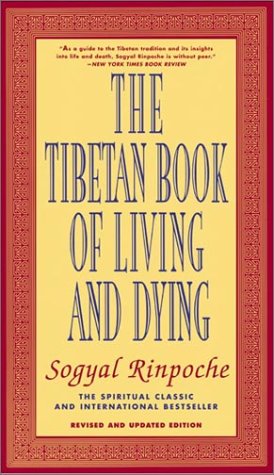
5.  “The Tibetan Book of Living and Dying” by Sogyal Rinpoche – Again, the whole Eastern spirituality thing.

6.  “The Stranger” by Albert Camus – The lead characters of my film at times question the purpose of their existence, whether they ever say this out loud or not. So I thought a little dose of existentialism was in order.

7.  “The Gnostic Gospels” by Elaine Pagels – I wanted to explore the intersection of Western and Eastern spirituality so the Gnostics seemed to be the way to go.

8.  “Psychological Types” by Carl Gustav Jung – The film also explores introversion versus extroversion so I wanted to bone up on psychological types and archetypes and nobody does that better than Carl Jung. Also, for any script, I think it’s a good exercise to break down which personality type fits each character. It really illuminates how and why they operate in the world.

9.  “Bhagavad Gita” – Are you sensing a trend?

10.  “Cinematic Storytelling” by Jennifer Van Sijll – I find this book to be an extremely helpful and practical guide for storyboards and shot ideas. It integrates the visual psychology of various styles of shots, so it’s very useful brainstorming tool to start the process.

11.  “The Koran” – Okay, you get the picture. But actually, “The Koran” has a very different take of religiosity and spirituality than the others and I wanted to get the perspective of a stridently monotheistic religion.

12.  “The Epic of Gilgamesh” by Anonymous – This account of a warrior friendship that ultimately leads to the realization of the fragility and mortality of the human body is even more profound than “The Iliad” to me. Its poetic exploration of friendship relates to some of the issues that the friends in my screenplay face down. It’s fascinating to read about these two men dealing with a very similar conflict thousands of years ago. The more things change, the more things stay the same.

If you take a break to read a bunch of books, some might say you’re just procrastinating. And they might be right. But on the other hand, I find that the best type of creativity can’t be forced.  It has to be coaxed. And ingesting new inspiration can suddenly pay off in ways you don’t expect. I feel like I haven’t been rewriting at all the last two or three weeks. I’ve been obsessed with starting this blog and with finishing editing on “Dumbass Filmmakers!” Then all of a sudden, literally right as I was falling asleep at around 2 a.m., I thought of an idea to solve the problem in the second act that bugs me the most. I’m not sure where that idea came from, but I’m pretty sure my dedication to research had something to do with it. I just can’t prove it yet.

Image

—

Hunter Lee Hughes is a filmmaker living and working in Los Angeles and the founder of Fatelink. His current feature film Guys Reading Poems is touring film festivals and this blog is dedicated to the process of making his second feature film, “Inside-Out, Outside-In.” If you enjoy the blog, please support our team by following us on Facebook, Twitter (@Fatelink) or Instagram (@Fatelink).

Share this:

  • Share on Facebook (Opens in new window) Facebook
  • Share on X (Opens in new window) X
  • Share on Tumblr (Opens in new window) Tumblr
  • Share on LinkedIn (Opens in new window) LinkedIn
Like Loading...

Top Ten Websites for Indie Filmmakers

23 Friday Mar 2012

Posted by hunterlh in Development

≈ Leave a comment

Tags

constant contact, dumbass filmmakers!, facebook, filmspecific, filmspecific.com, gay mafia, gaymafia, gaymafia:gen2, google analytics, imdbpro, indiewire, quickbooksonline, top ten sites, top ten sites for independent filmmakers, top ten sites for indie filmmakers, top ten websites, top ten websites for independent filmmakers, top ten websites for indie filmmakers, vimeo, winner takes all, withoutabox, wordpress

Okay, so here’s my brief opinion on the top ten websites that are helpful to the indie filmmaker in the development or pre-production process.

10.  QuickBooks Online – Yes, it costs some money.  But it allows you to easily categorize expenses, which in turn allows you to build better, more reasonable budgets. I’m able to quickly run reports on how much we’ve spent on “Winner Takes All” and “Dumbass Filmmakers!” and break down the expenses into categories.  Plus, it helps in allowing you to create 1099’s and other financial documents you might need and easily creates quarterly reports, which you’ll legally be needing to create if you’ve formed an LLC.

9. Google Analytics – If you have any previous projects, Google Analytics is a must to see what kind of traffic you have and where it’s coming from.  For the site for “Winner Takes All,” we’ve had visits from 86 different countries.  I know the countries where we’ve established a following.  I know how many hits various cast members have driven to the site.  I know what sorts of search words have sent people to me. This is all crucial information when thinking about marketing in the future.

8.  WithoutaBox – Yes, I believe if you’re in any stage of your film’s process, you should be looking on WithoutaBox.  There are so many categories for researching film festivals and it helps to start tracking the festivals long before you apply so you get a sense of the flavor of each festival. Eventually, you can target your submission to the specifics of those receiving it.

7.  Wordpress – This blog is being written on WordPress.  My personal acting site and business site are flash.  The sites for “Winner Takes All” and “Dumbass Filmmakers!” were created by a graphic designer, who is fabulous.  However, with each little update I make on any of them, I have to rely on someone who’s not only brilliant, but also very, very busy.  And not free.  Wordpress allows me to go completely DIY and create more content cheaply.  If you can create some sort of site for your film on WordPress – at least in the beginning – it saves on marketing costs when you don’t have a budget yet.

6.  Vimeo – This is now the go-to site for filmmakers sharing their work on the Internet. The comments and people involved are a cut above what you find on that other major video sharing site.  OK, let’s be real.  The people on Vimeo are like four or five levels above the other site.  And most filmmakers worth much would rather have their reel on Vimeo, so it’s a great place to sample work for potential creative collaborators.  I’m not sure why it hasn’t caught on with actors quite as much yet, but I’m sure they will follow soon.

5.  Constant Contact – If you’re going to do any type of email marketing campaign to accompany your film, Constant Contact has tons of videos about strategies and tips on email marketing.  Even if you don’t end up going with their service and decide to DIY, the tips and mindset they advocate are worth sampling.

4.  IndieWire – I’m cheap.  So I don’t want to pay to subscribe to Variety, but I want to read about trends in filmmaking somewhere.  My choice is IndieWire.

3. FilmSpecific – The free blog section of FilmSpecific has lots of articles about financing and distribution.  Interesting is blog author and former sales agent Stacey Park’s discussion of “distribution-in-reverse” whereby filmmakers figure out their target audiences and pipeline to those audiences before even getting out of the development process.  I’m always nervous when we take the audience into account too much in the creative process – I trust the story to tell me where it’s going – but I do think the advice about being realistic about the target audiences and markets available is well worth reading and considering.

2. Facebook – Maybe it’s stating the obvious, but sometimes the obvious is essential.  Facebook allows me to connect casually with other filmmakers and actors I meet without coming across as needy or wanting something from them.  It also allows me to understand the filmmakers a little more from their profiles.  I always check what movies they like before heading to a meeting.  And again, it goes without saying how valuable it is to know who-is-mutual-friends-with-who.  Are they connected to a bunch of theatre people?  To GayMafia:Gen2?  Etc.

1. IMDbPro – I know that almost all of us are struggling for money as indie filmmakers.  But IMDbPro is worth the monthly fee.  When researching actors, I don’t want to call SAG to figure out who their agent is.  I want to look it up on IMDbPro and see who else that agent represents while I’m at it and I love the function of being able to see if I’m connected to the other person through mutual co-workers.  And believe it or not, even with only 16 credits (but who’s counting? ;)), it’s amazing just how many people I’m already connected to in this way.  And very helpful to know when making introductory calls.

—

Hunter Lee Hughes is a filmmaker living and working in Los Angeles and the founder of Fatelink. His current feature film Guys Reading Poems is touring film festivals and this blog is dedicated to the process of making his second feature film, “Inside-Out, Outside-In.” If you enjoy the blog, please support our team by following us on Facebook, Twitter (@Fatelink) or Instagram (@Fatelink).
Share this:

  • Share on Facebook (Opens in new window) Facebook
  • Share on X (Opens in new window) X
  • Share on Tumblr (Opens in new window) Tumblr
  • Share on LinkedIn (Opens in new window) LinkedIn
Like Loading...

What the heck is mindmapping? Can it help the indie filmmaker?

22 Thursday Mar 2012

Posted by hunterlh in Development

≈ Leave a comment

Tags

brainstorming, brainstorming for filmmakers, creative brainstorming, Gorilla software, hunter lee hughes, indie filmmakers, indie filmmaking, inside-out, Mindmapping, mindmapping for filmmakers, MindNode, MindNodePro, outside-in, right brain, steve jobs

It’s hard to beat mindmapping as a creative tool for brainstorming.  Rumor has it that no less than Steve Jobs used mindmapping to develop new Apple products.  It mimics the way our right-brain comes up with ideas and makes connections between images, thoughts and realizations.  Only, with mindmapping – unlike the actual thinking process – you walk away with a clear, concise and stimulating visual record of that activity.  And you can go back and refer to it at any time.

I use mindmapping a LOT in the process of developing my feature film script.  I mindmap scenes,  characters, ideas.  But it doesn’t end there.  I’ll mindmap a financing strategy, the benefits/drawbacks of a certain name actor or even a segment of my target audience.  It makes work super energizing and even fun (Mary Poppins would approve!).  Plus, work created in a mindmap can easily be re-tooled for other mediums, like an excel worksheet or a powerful list in Gorilla (more on the awesome-ness of this software later).

So if I had loose lips that sink ships, I’d share one of my own mindmaps with you.  But you must know by now that attempting to be mysterious is a bit of a turn-on for me.  But TRUST ME – it’s worth adding to your indie filmmaker arsenal if you’re not doing it already.  And if you are doing it already, consider expanding the number of subjects/ideas you put to a mindmap.  Generally, the only thing you have to lose is time…and it’s a good investment of that.

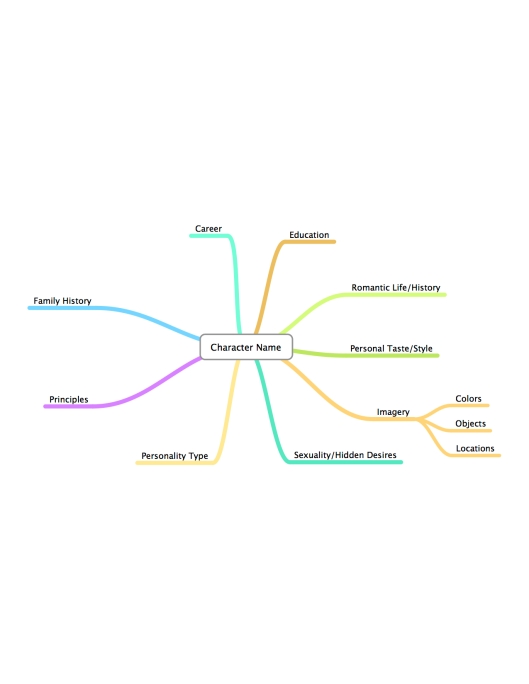
There are plenty of free mindmapping programs out there.  A little googling will easily show you a list with reviews, etc.  I use MindNodePro.  It costs a little money, but it allows the integration of visual images and hyperlinks into the mindmap, something important to a filmmaker, in my opinion.

Character Mindmap

Sample of a character mindmap

—

Hunter Lee Hughes is a filmmaker living and working in Los Angeles and the founder of Fatelink. His current feature film Guys Reading Poems is touring film festivals and this blog is dedicated to the process of making his second feature film, “Inside-Out, Outside-In.” If you enjoy the blog, please support our team by following us on Facebook, Twitter (@Fatelink) or Instagram (@Fatelink).
Share this:

  • Share on Facebook (Opens in new window) Facebook
  • Share on X (Opens in new window) X
  • Share on Tumblr (Opens in new window) Tumblr
  • Share on LinkedIn (Opens in new window) LinkedIn
Like Loading...

My film’s mash-up equation

21 Wednesday Mar 2012

Posted by hunterlh in Development

≈ Leave a comment

Tags

filmmaking, Iain Softley, indie filmmaking, Little Miss Sunshine, making an equation for your movie, movie mash-ups, movie pitches, pitching your screenplay, sundance, The Vow, Transformers, We Need To Talk About Kevin, Wings of the Dove

At a studio lot, you might hear, “It’s Transformers meets The Vow.”

At Sundance, you might hear, “It’s Little Miss Sunshine meets We Need to Talk About Kevin.  We’re approaching Michael Fasbender.”

At Hunter’s apartment, you might hear…Romeo the pug snoring…but also, “It’s All That Jazz meets Wings of the Dove plus meditation.”  Huh???

Seriously, Iain Softley’s Wings of the Dove has influenced me so much over the years and, indeed, is one of the two films I’m using as inspiration while developing my screenplay.  It includes terrific performances all around, a tight screenplay and a very memorable score.  Highly recommended!

—

Hunter Lee Hughes is a filmmaker living and working in Los Angeles and the founder of Fatelink. His current feature film Guys Reading Poems is touring film festivals and this blog is dedicated to the process of making his second feature film, “Inside-Out, Outside-In.” If you enjoy the blog, please support our team by following us on Facebook, Twitter (@Fatelink) or Instagram (@Fatelink).
Share this:

  • Share on Facebook (Opens in new window) Facebook
  • Share on X (Opens in new window) X
  • Share on Tumblr (Opens in new window) Tumblr
  • Share on LinkedIn (Opens in new window) LinkedIn
Like Loading...

So where are we, kid?

20 Tuesday Mar 2012

Posted by hunterlh in Development

≈ 2 Comments

Tags

all that jazz, betty jones, bob fosse, dumbass filmmakers!, inside-out, inside-out-outside-in, ivana chubbuck, meditation, meditation retreat, private equity investor, Script Development, webseries, winner takes all

In January, 2010, I went on a meditation retreat, led by local spiritual guru Betty Jones. Sandwiched in between the production of a short (“Winner Takes All“) and a webseries (“Dumbass Filmmakers!“), it was designed to be a much-needed break from the demands of the material world and, especially, Los Angeles. And I can honestly say that all the meditating…and sleeping…and gentle contemplating…restored at least a portion of my sanity. Of course, I also walked away from the weekend with a killer idea for a feature-length movie.

A little over two years later, I’ve written the screenplay of “Inside-Out, Outside-In.”  This January, after some drama, we workshopped the climatic scene of the piece in Ivana Chubbuck‘s master acting class (more on this in a future post).  And I’ve managed to do some rewriting based on that experience. We’ve already had interest by some private equity investors. One of my investors for the webseries saw a rough cut of that project and immediately expressed interest in signing up for the feature.  That was a fantastic feeling…and a moment when my brain started generating things-to-do-lists and attempting to re-trigger an addiction to coffee. So I’m simultaneously refining the script and putting an investment package together while interest remains high.

But, for now, a huge part of the process is purely creative.  Jotting down ideas for shots.  Mindmapping the characters and scenes. Brainstorming about everything from character names to color palettes to costumes. And rewriting, rewriting, rewriting. That may bring you to the question – so what is the script about anyway? Well…I’m not ready to tip my hand on the story just yet…BUT…I will include a trailer here of one of the two films that have inspired me in the development of the film. I absolutely LOVE Bob Fosse’s brilliant take on a choreographer’s descent into that great twilight set against the backdrop of the fast-paced, experiential task of putting together a Broadway show. I’ve seen it easily 25 times and if you realize later on that I stole a shot or two from it…well…you read it here first.

—

Hunter Lee Hughes is a filmmaker living and working in Los Angeles and the founder of Fatelink. His current feature film Guys Reading Poems is touring film festivals and this blog is dedicated to the process of making his second feature film, “Inside-Out, Outside-In.” If you enjoy the blog, please support our team by following us on Facebook, Twitter (@Fatelink) or Instagram (@Fatelink).
Share this:

  • Share on Facebook (Opens in new window) Facebook
  • Share on X (Opens in new window) X
  • Share on Tumblr (Opens in new window) Tumblr
  • Share on LinkedIn (Opens in new window) LinkedIn
Like Loading...
← Older posts
Newer posts →

Recent Posts

  • We’ve moved!
  • Co-Creating With Your “Audience”
  • The Voice of Your Film
  • New Film Distribution Models – 7 Ideas
  • The Duty of the Artist

Archives

  • December 2018
  • January 2017
  • October 2016
  • September 2016
  • February 2015
  • January 2015
  • December 2014
  • November 2014
  • June 2013
  • April 2013
  • March 2013
  • February 2013
  • January 2013
  • December 2012
  • November 2012
  • October 2012
  • August 2012
  • July 2012
  • May 2012
  • April 2012
  • March 2012

Categories

  • Budgeting
  • Casting
  • Development
  • Financing
  • Interviews
  • Post-Production
  • Pre-Production
  • Production
  • Release
  • Scheduling
  • The Script
  • Uncategorized
  • Wardrobe

Connect with us….

Connect with us….

Twitter Updates

Tweets by fatelink

Create a free website or blog at WordPress.com.

Privacy & Cookies: This site uses cookies. By continuing to use this website, you agree to their use.
To find out more, including how to control cookies, see here: Cookie Policy
  • Subscribe Subscribed
    • Inside-Out, Outside-In
    • Join 43 other subscribers
    • Already have a WordPress.com account? Log in now.
    • Inside-Out, Outside-In
    • Subscribe Subscribed
    • Sign up
    • Log in
    • Report this content
    • View site in Reader
    • Manage subscriptions
    • Collapse this bar
 

Loading Comments...
 

    %d